production / regions / planning
How STELRN Plans Production Regions for Different Products
- Author
- STELRN Editorial Team
- Reviewed by
- STELRN Commercial Review
- Updated
- 2026-07-30
- Content source
- Industry reference
- Target buyer
- International buyers, brand teams, importers, and distributors preparing a controlled China supply program.
- Procurement stage
- Product development through delivery planning
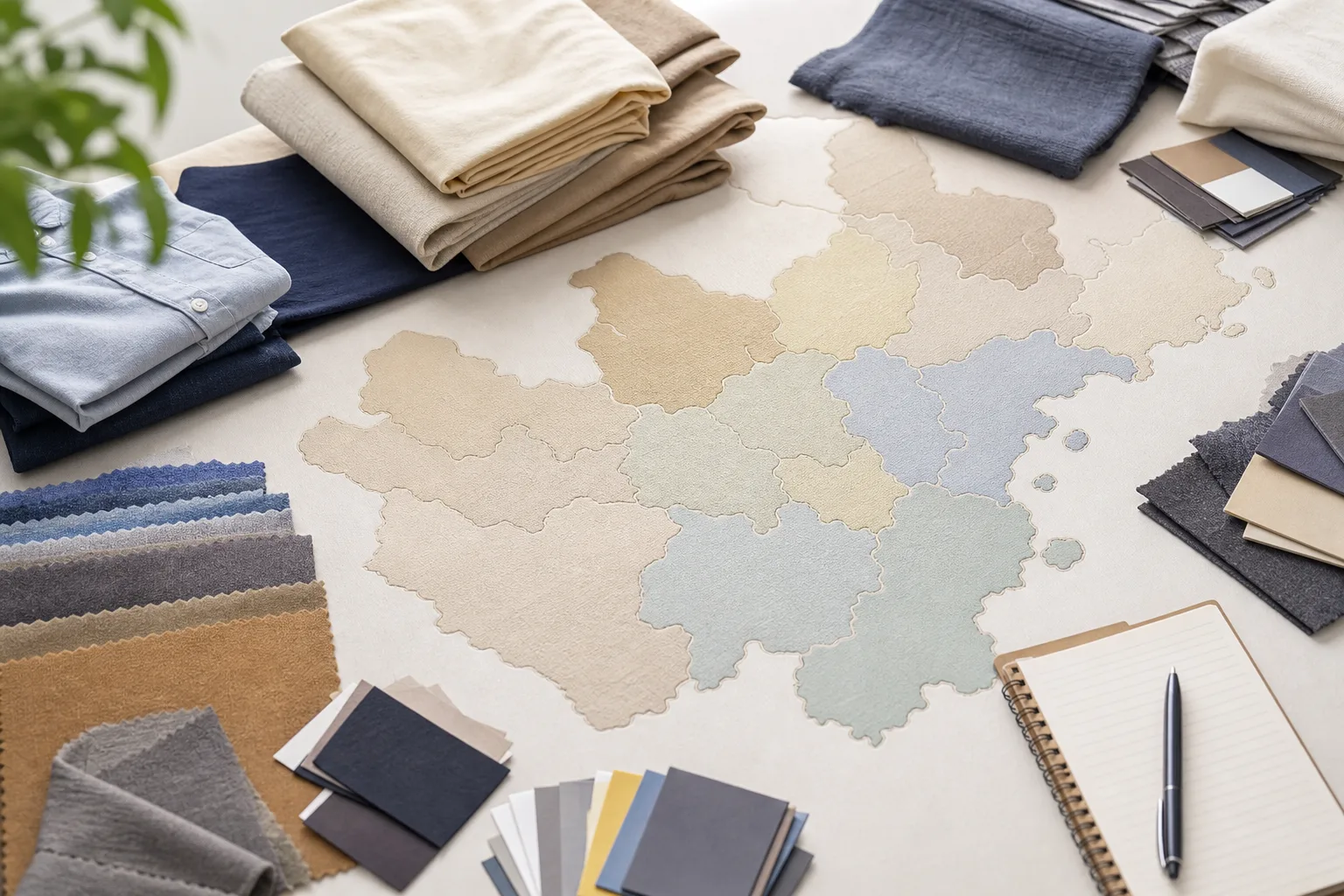
Different regions in China have different strengths in fabrics, processes, garment manufacturing, and supporting services. Buyers do not need to choose a production region before contacting STELRN. Share product references, specifications, quantity, quality standards, destination market, and timing. STELRN will assess product feasibility, prepare a suitable production and quality plan, and provide one commercial quotation.
Typical industry bases STELRN may draw on when planning an order include:
Guangdong Xintang — denim fabric, washing, and denim garment programs.
Quanzhou, Jinjiang, and Shishi in Fujian — sportswear, casualwear, and knit apparel ecosystems.
Hangzhou and Linping — fashion womenswear, design development, and brand-oriented small-to-mid runs.
Huzhou Zhili — children’s wear, school uniforms, and flexible related supply.
Jiangyin — textiles, wool spinning, knitwear, and fabric supporting industries.
Ningbo — garment, shirt, knit, and export-oriented manufacturing.
Shandong — workwear, protective apparel, and scaled clothing manufacturing.
Yiwu — small commodities, accessories, and packing support.
Industry clusters are planning background only. Final production arrangements depend on the specific product, materials, process, quantity, quality requirements, lead time, and confirmed capacity for that order. MOQ and timing are set by materials, color count, process, tooling, packing, and line availability — not by region labels alone.
What to send STELRN: product image or sample reference; fabric and process notes; quantity; quality expectations; target price if known; destination market; packing; and required timing. STELRN reviews those inputs and proposes how the order should be produced and delivered.
Next steps: submit product requirements for a feasibility review and quotation; review Capabilities for how STELRN runs sampling, production, QC, and export delivery; browse the product catalog for category scope.
Frequently asked questions
Do I need to choose a production region before inquiry?
No. Send product requirements first. STELRN proposes the production arrangement after reviewing product, materials, process, quantity, quality, destination, and timing.
Who is accountable for the production plan?
STELRN is your China supplier contact for quotation, sampling, production management, quality inspection, and export delivery under one commercial relationship.
Turn this guidance into a sourcing brief
Share product references, specifications, quantity, destination market, quality expectations, and timing. STELRN will assess feasibility and propose a suitable production plan.