
sourcing / procurement / product brief
How to Prepare a Product Brief for STELRN Quotation
- Author
- STELRN Editorial Team
- Reviewed by
- STELRN Commercial Review
- Updated
- 2026-07-17
- Content source
- Industry reference
- Target buyer
- International buyers, brand teams, importers, and distributors preparing a controlled China supply program.
- Procurement stage
- Product development through delivery planning
A useful product brief reduces interpretation before quotation and sampling. It does not need to be a polished technical pack, but it must distinguish facts, preferences, references, and unresolved decisions.
Start with commercial context: product category, intended use, destination market, target quantity or range, expected order pattern, target delivery window, and preferred trade term. If a target price is provided, state what it includes; otherwise ask STELRN to identify cost drivers rather than forcing an unsupported number.
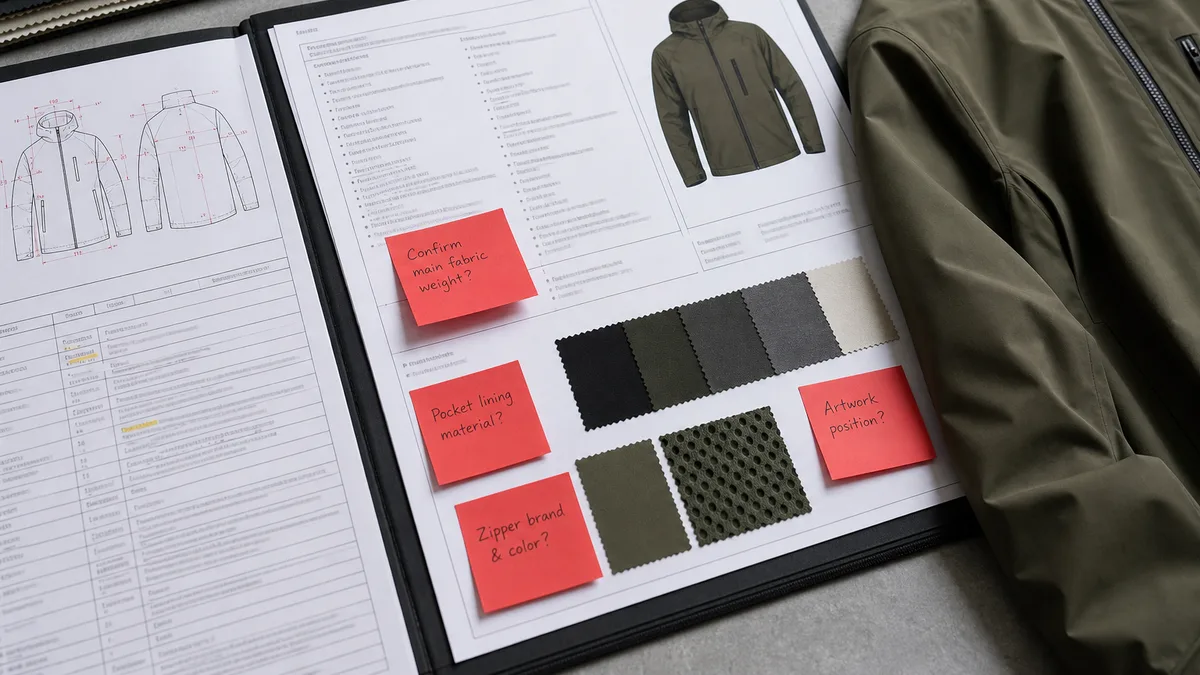
Define the product in measurable terms. Include dimensions and tolerances, material or composition, weight or thickness where relevant, construction, color system, surface treatment, printing or embroidery method, trims, hardware, performance expectations, and sample size. Reference images should explain design intent, not substitute for measurements.
Separate requirements into three columns: fixed, acceptable alternatives, and supplier proposal requested. This prevents a critical material from being silently replaced while still allowing practical options for components that are not yet fixed.
Control files and versions. Name the brief, drawings, artwork, color references, and packaging files consistently. Put a revision date or version on each controlled document. When sending an update, summarize exactly what changed and withdraw obsolete references.
Add quality and compliance questions without claiming that a document exists. Identify destination-market labeling, restricted-substance, testing, traceability, or packaging obligations that the buyer has confirmed. Ask which evidence can be provided and when it can be reviewed.
Quotation checklist
- specification version
- quantity basis
- sample and tooling charges
- unit price
- packaging included or excluded
- testing responsibility
- production lead-time basis
- quotation validity
- payment assumptions
- trade term
- exclusions.
Common mistakes are using mood images without specifications, mixing several product versions in one thread, leaving quantity blank, hiding an unrealistic deadline, or asking for “best quality” without measurable criteria. A strong brief gives STELRN one clear decision set and creates a baseline for later sample approval.
Frequently asked questions
Can reference images replace a specification?
No. Reference images communicate visual intent, but measurable dimensions, materials, construction, colors, and tolerances still need to be stated.
How should unknown details be handled?
Mark them as open decisions and state whether alternatives are acceptable or a STELRN proposal is requested.
Turn this guidance into a sourcing brief
Attach the latest specification, reference images, quantity range, destination, and target date to your RFQ, and identify which details STELRN may propose.