
sourcing / fabric / apparel
Fabric Selection for Apparel Sourcing Programs
- Author
- STELRN Editorial Team
- Reviewed by
- STELRN Commercial Review
- Updated
- 2026-07-17
- Content source
- Industry reference
- Target buyer
- International buyers, brand teams, importers, and distributors preparing a controlled China supply program.
- Procurement stage
- Product development through delivery planning
Fabric selection links design intent to production behavior, quality risk, cost, and lead time. A swatch that looks suitable on a desk may behave differently after cutting, sewing, washing, finishing, or repeated use.
Define end use first. Record garment type, season, silhouette, required drape or structure, skin-contact expectations, stretch and recovery, opacity, durability, care method, destination climate, and any confirmed market requirements. These needs narrow the relevant fabric family.
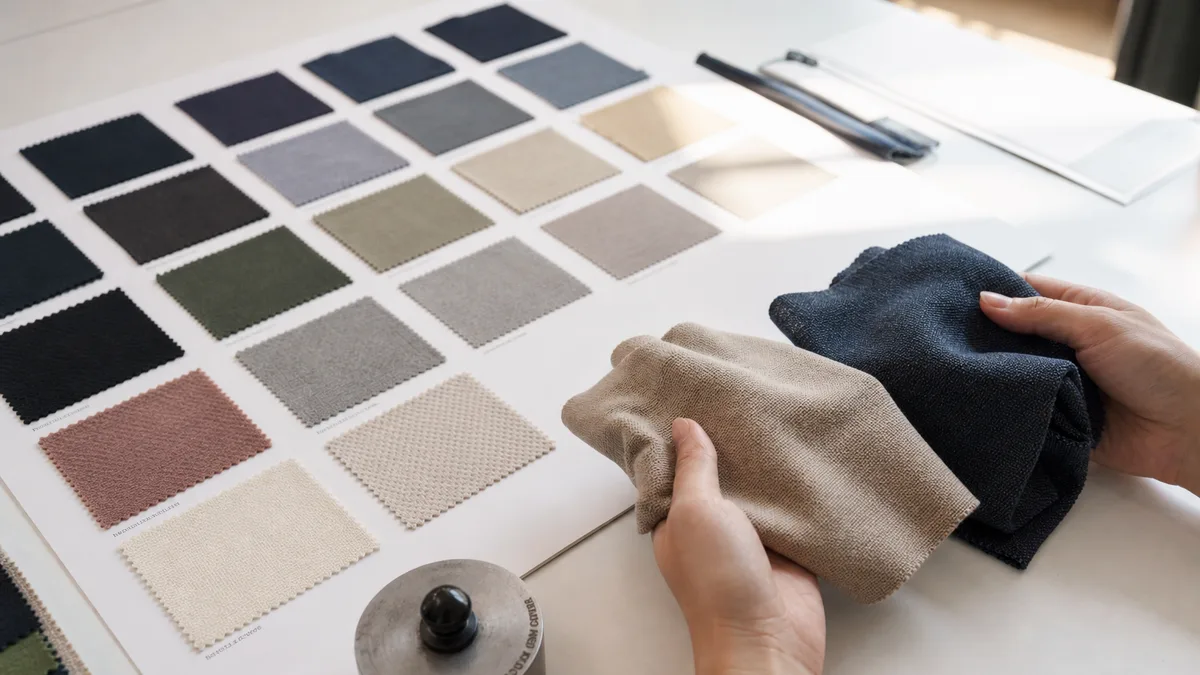
Describe the material technically: fiber composition; woven or knitted construction; yarn type where important; weight; width; density or gauge; finish; stretch direction; color method; and face or back orientation. Use an approved physical reference when hand feel or appearance cannot be fully expressed numerically.
Compare options using the same criteria. Review hand feel, drape, surface consistency, shade, dimensional stability, pilling tendency, abrasion needs, colorfastness needs, seam behavior, print compatibility, and cutting or sewing implications. Select tests based on product use and destination requirements rather than ordering an arbitrary package.
Check commercial availability. Confirm whether the fabric is stock-supported or made to order, minimum dye or knit quantity, color minimum, greige availability, sampling lead time, bulk lead time, width assumptions, expected usable yield, and whether surcharges apply below a threshold.
Control color and lot variation. Identify the color standard, viewing conditions, approval method, tolerance approach, and whether different production lots can be mixed. Keep approved lab dips, strike-offs, or shade references linked to the specification version.
Approval checklist
- intended use
- technical description
- physical reference
- test plan
- sample garment result
- color reference
- bulk availability
- minimums
- lead-time effect
- yield assumption
- care and labeling inputs
- approved alternatives.
Common mistakes include selecting only by composition, ignoring usable width, approving color without lighting controls, using sample yardage that differs from bulk construction, and changing finish without rechecking shrinkage or hand feel. Fabric approval should connect the approved textile to the approved garment and the commercial plan.
Frequently asked questions
Is fiber composition enough to specify a fabric?
No. Construction, weight, width, density or gauge, finish, stretch, color method, and an approved physical reference may all affect performance.
When should fabric testing be selected?
Choose tests after defining product use, care method, performance risks, and confirmed destination-market requirements.
Turn this guidance into a sourcing brief
Send the garment use, target composition, construction, weight range, color requirements, performance needs, quantity, and destination so fabric options can be compared on one basis.