Priority sourcing direction · Industry guidance

Down jacket

For cold-weather outerwear buyers who need to align shell, insulation system, baffle construction, warmth intent, leakage control, closures, fit, and care labeling before supplier comparison.

This page supports procurement preparation and supply coordination; it does not represent stock, fixed price, fixed MOQ, fixed timing, or a specific supplier commitment.

Start a prefilled Down jacket RFQ
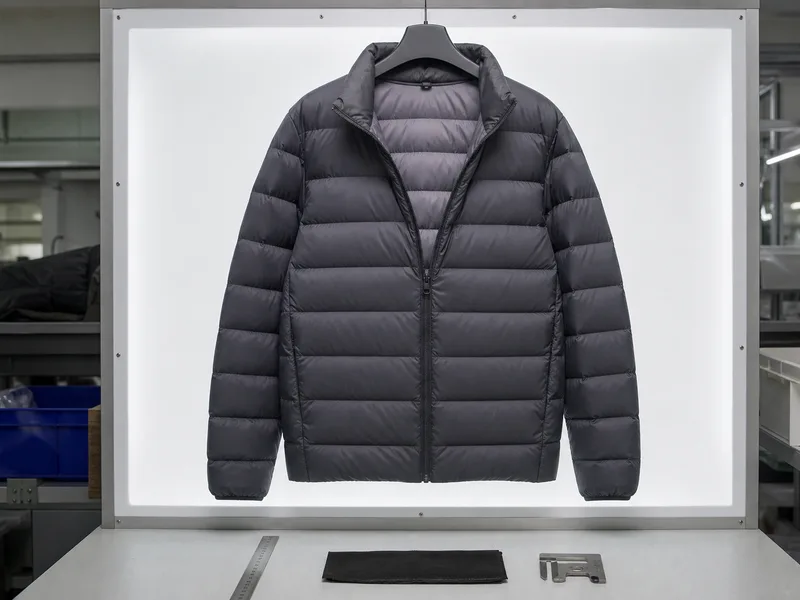
Representative Down jacket product imageAI-generated representative image

Media source: uploaded representative catalog image for procurement guidance; not evidence of a specific client, order, supplier, stock position, or delivery.

Buyer use case

For cold-weather outerwear buyers who need to align shell, insulation system, baffle construction, warmth intent, leakage control, closures, fit, and care labeling before supplier comparison.

Sample approval checks

  • Review silhouette after loft recovery, fill distribution, cold spots, hood visibility, zipper operation, pocket access, cuff seal, lining pull, leakage, odor, weight balance, and pack recovery.
  • For every Down jacket sample, record purpose, specification version, material status, comments, open items, and approval limits; photographs do not replace necessary physical review.

QC checkpoints

  • Control material identity, baffle and stitch integrity, fill allocation records, leakage, broken needles or sharp remnants, zipper and snap function, symmetry, measurements, cleanliness, and loft recovery.
  • Use the current specification and approved sample for QC; record actual results, recurrence, affected quantity, and disposition owner without presenting visual checks as compliance proof.

Materials & construction

  • Specify shell and lining composition, coating or finish, fabric density, down or alternative fill description, fill distribution method, baffle construction, leakage risk, trims, and care compatibility.
  • Link Down jacket material choices to end use, target hand, care method, and acceptable alternatives; recheck sample, cost, and timing effects after any substitution.

Specification discussion points

  • Discuss garment zones, baffle dimensions, target fill allocation by zone, hood and collar, storm flap, zipper, pocket insulation, cuffs, hem adjustment, measurement layers, and mobility.
  • Mark fixed requirements, supplier-proposal variables, measuring methods, tolerances, and approval references so the Down jacket quotation does not rely on hidden assumptions.

Packaging considerations

  • Agree recovery time before packing, compression limit, bag dimensions, moisture protection, desiccant policy if applicable, hood and zipper protection, carton loading, and unpacking instructions.
  • Packaging approval should cover unit protection, label-data source, assortment, carton dimensions and weight, and transport method, using a complete pack to verify Down jacket appearance and function.

Common brief gaps

  • Briefs may omit fill distribution by zone, shell density and finish, warmth-use context, leakage acceptance, baffle geometry, hardware specification, compression limit, and care-label basis.
  • Add quantity range, destination, target window, trade term, testing responsibility, document version, and approver because these commercial inputs can change the feasible Down jacket route.

FAQ

Is total fill weight enough to compare down jackets?

No. Garment size, fill type, distribution by zone, baffle volume, shell system, construction, and intended conditions affect the result and comparison basis.

What should be checked after compressed transport?

Allow an agreed recovery period, then review loft, fill migration, creasing, odor, moisture, closure damage, silhouette, and whether the packing method remains suitable.