Priority sourcing direction · Industry guidance

Hooded sweatshirt

For streetwear, campus, team, work-leisure, merchandise, or private-label hoodie programs where fabric body, hood volume, rib recovery, print or embroidery, and relaxed fit must work together.

This page supports procurement preparation and supply coordination; it does not represent stock, fixed price, fixed MOQ, fixed timing, or a specific supplier commitment.

Start a prefilled Hooded sweatshirt RFQ
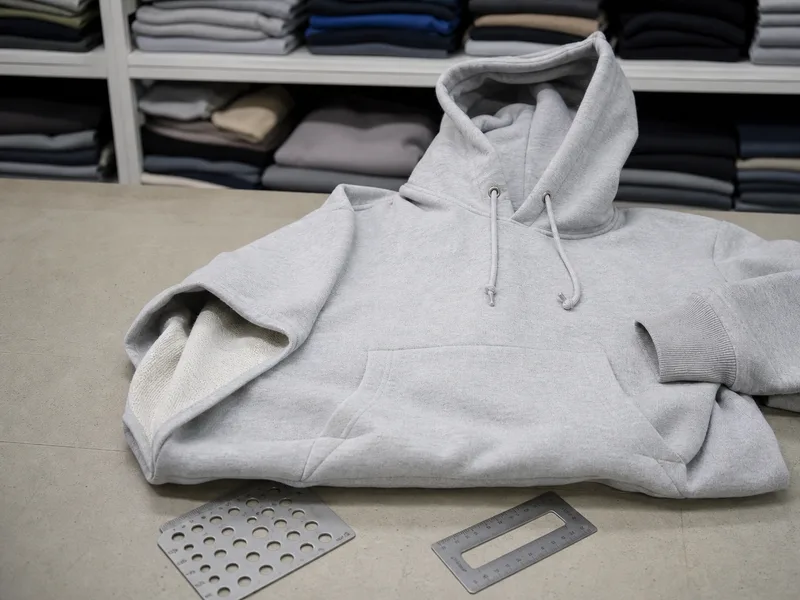
Representative Hooded sweatshirt product imageAI-generated representative image

Media source: uploaded representative catalog image for procurement guidance; not evidence of a specific client, order, supplier, stock position, or delivery.

Buyer use case

For streetwear, campus, team, work-leisure, merchandise, or private-label hoodie programs where fabric body, hood volume, rib recovery, print or embroidery, and relaxed fit must work together.

Materials & construction

  • Define fleece or French terry construction, face yarn, loop or brushed back, composition, weight, width, shrinkage, pilling, color method, rib specification, drawcord, eyelets, and reinforcement.
  • Link Hooded sweatshirt material choices to end use, target hand, care method, and acceptable alternatives; recheck sample, cost, and timing effects after any substitution.

Specification discussion points

  • Fix hood panel count and depth, crossover, drawcord channel, kangaroo pocket, shoulder drop, body length, sleeve volume, rib height, seam construction, artwork position, and size grading.
  • Mark fixed requirements, supplier-proposal variables, measuring methods, tolerances, and approval references so the Hooded sweatshirt quotation does not rely on hidden assumptions.

Sample approval checks

  • Wear-test hood coverage, neckline comfort, shoulder balance, pocket access, sleeve movement, cuff and hem recovery, drawcord behavior, artwork hand, and dimensional change after care.
  • For every Hooded sweatshirt sample, record purpose, specification version, material status, comments, open items, and approval limits; photographs do not replace necessary physical review.

QC checkpoints

  • Check fabric shade, brushing consistency, panel direction, seam stretch, hood symmetry, pocket position, rib measurements, drawcord security, artwork defects, pilling, shrinkage, and twisting.
  • Use the current specification and approved sample for QC; record actual results, recurrence, affected quantity, and disposition owner without presenting visual checks as compliance proof.

Packaging considerations

  • Confirm whether the hood and drawcord are folded inward, print surfaces need interleaving, brushed fabric needs moisture protection, garment thickness affects bag size, and carton compression alters loft.
  • Packaging approval should cover unit protection, label-data source, assortment, carton dimensions and weight, and transport method, using a complete pack to verify Hooded sweatshirt appearance and function.

Common brief gaps

  • Missing inputs often include finished fabric weight, inside finish, rib recovery, hood dimensions, drawcord safety requirement, artwork technique, oversize fit reference, and post-wash tolerance.
  • Add quantity range, destination, target window, trade term, testing responsibility, document version, and approver because these commercial inputs can change the feasible Hooded sweatshirt route.

FAQ

Why approve the hoodie after washing?

Body fabric, rib, seams, brushing, artwork, and drawcord can change differently; post-care review exposes twisting, shrinkage, pilling, and surface changes.

What defines hood fit beyond overall size?

Panel geometry, depth, opening, crossover, neckline attachment, seam allowance, fabric body, drawcord channel, and intended head coverage all matter.