Priority sourcing direction · Industry guidance

Oxford shirt

For buyers developing uniform, collegiate, private-label, or smart-casual shirt programs where the oxford weave, collar behavior, repeatable fit, and laundering appearance must be agreed before quotation and sampling.

This page supports procurement preparation and supply coordination; it does not represent stock, fixed price, fixed MOQ, fixed timing, or a specific supplier commitment.

Start a prefilled Oxford shirt RFQ
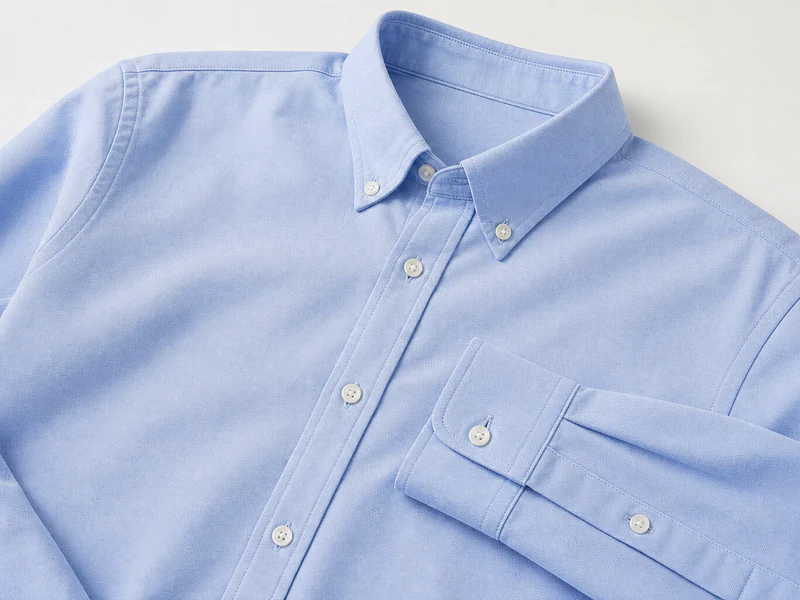
Representative Oxford shirt product imageAI-generated representative image

Media source: uploaded representative catalog image for procurement guidance; not evidence of a specific client, order, supplier, stock position, or delivery.

Buyer use case

For buyers developing uniform, collegiate, private-label, or smart-casual shirt programs where the oxford weave, collar behavior, repeatable fit, and laundering appearance must be agreed before quotation and sampling.

Materials & construction

  • Define fiber blend, basket-weave character, fabric weight, usable width, finish, opacity, shrinkage risk, and whether collar and cuff interlining must support a crisp or relaxed result.
  • Link Oxford shirt material choices to end use, target hand, care method, and acceptable alternatives; recheck sample, cost, and timing effects after any substitution.

Specification discussion points

  • Discuss collar shape, collar-point length, placket, yoke, pocket, cuff, hem, fit block, measurement tolerances, button specification, stitch density, and stripe or logo placement.
  • Mark fixed requirements, supplier-proposal variables, measuring methods, tolerances, and approval references so the Oxford shirt quotation does not rely on hidden assumptions.

Sample approval checks

  • Approve fabric hand and shade separately from fit; then check collar roll, placket flatness, cuff closure, seam puckering, button alignment, and laundering response on the identified sample version.
  • For every Oxford shirt sample, record purpose, specification version, material status, comments, open items, and approval limits; photographs do not replace necessary physical review.

QC checkpoints

  • Measure collar, chest, shoulder, sleeve, back length, and cuff; review seam security, interlining adhesion, button attachment, shade consistency, pressing, and symmetry against approved references.
  • Use the current specification and approved sample for QC; record actual results, recurrence, affected quantity, and disposition owner without presenting visual checks as compliance proof.

Packaging considerations

  • Confirm folding board or method, collar support, button protection, tissue or clip use, size marking, inner-pack ratio, moisture control, and carton pressure that could distort the collar.
  • Packaging approval should cover unit protection, label-data source, assortment, carton dimensions and weight, and transport method, using a complete pack to verify Oxford shirt appearance and function.

Common brief gaps

  • Briefs often omit the approved fit block, oxford weight and finish, collar stiffness target, laundering expectation, tolerance table, and whether packaging must preserve a retail-ready collar shape.
  • Add quantity range, destination, target window, trade term, testing responsibility, document version, and approver because these commercial inputs can change the feasible Oxford shirt route.

FAQ

Is “100% cotton oxford” a complete fabric specification?

No. Weave scale, yarn, weight, width, finish, shrinkage, shade method, and an approved hand-feel reference can materially change the shirt result.

What should an Oxford shirt fit sample approve?

Record the measurement chart, silhouette, collar and cuff behavior, placket balance, sleeve mobility, hem position, and any attributes still awaiting production fabric.