Priority sourcing direction · Industry guidance

Trench coat

For fashion, commuter, uniform, or private-label outerwear programs where fabric drape, weather-facing finish, layered construction, belt and hardware, tailored balance, and wearing ease require detailed sampling.

This page supports procurement preparation and supply coordination; it does not represent stock, fixed price, fixed MOQ, fixed timing, or a specific supplier commitment.

Start a prefilled Trench coat RFQ
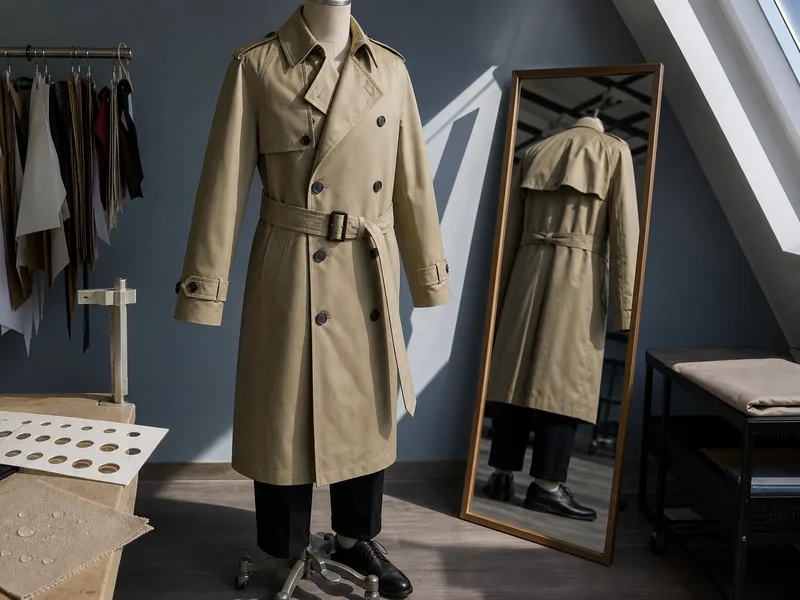
Representative Trench coat product imageAI-generated representative image

Media source: uploaded representative catalog image for procurement guidance; not evidence of a specific client, order, supplier, stock position, or delivery.

Buyer use case

For fashion, commuter, uniform, or private-label outerwear programs where fabric drape, weather-facing finish, layered construction, belt and hardware, tailored balance, and wearing ease require detailed sampling.

Specification discussion points

  • Fix coat length, lapel and storm-flap geometry, epaulettes, sleeve tabs, vent, pockets, belt length and loops, lining coverage, button positions, layering ease, tolerances, and topstitching.
  • Mark fixed requirements, supplier-proposal variables, measuring methods, tolerances, and approval references so the Trench coat quotation does not rely on hidden assumptions.

Common brief gaps

  • Common gaps include intended layering, finished fabric finish, lining specification, coat and belt dimensions, hardware finish, water-repellency test basis, vent construction, and hanging-versus-folded packing.
  • Add quantity range, destination, target window, trade term, testing responsibility, document version, and approver because these commercial inputs can change the feasible Trench coat route.

Materials & construction

  • Define cotton twill, polyester, nylon, or blend; weight, weave, finish, water-repellency intent if any, lining, interlining, seam behavior, colorfastness needs, buttons, buckles, and belt materials.
  • Link Trench coat material choices to end use, target hand, care method, and acceptable alternatives; recheck sample, cost, and timing effects after any substitution.

Sample approval checks

  • Review hang and balance open, closed, and belted; check lapel roll, shoulder line, sleeve pitch, storm flap, pocket access, vent opening, lining movement, hardware, and appearance after care.
  • For every Trench coat sample, record purpose, specification version, material status, comments, open items, and approval limits; photographs do not replace necessary physical review.

QC checkpoints

  • Inspect shade, surface finish, panel direction, symmetry, topstitching, seam puckering, fused areas, lining ease, button and buckle security, belt dimensions, measurements, pressing, and water-facing finish where specified.
  • Use the current specification and approved sample for QC; record actual results, recurrence, affected quantity, and disposition owner without presenting visual checks as compliance proof.

Packaging considerations

  • Confirm hanging or folded presentation, lapel and shoulder support, belt restraint, buckle protection, tissue at hardware contact points, garment-bag dimensions, moisture control, and carton length.
  • Packaging approval should cover unit protection, label-data source, assortment, carton dimensions and weight, and transport method, using a complete pack to verify Trench coat appearance and function.

FAQ

Should a trench-coat sample be reviewed only buttoned?

No. Review it open, closed, belted, moving, and over the intended underlayer because balance, lapel, vent, sleeve, and lining behavior can change.

Does “water resistant” define the required finish?

No. The buyer should identify the intended exposure, test method or review basis, durability expectation, seam limitations, care method, and labeling language.